A beautiful home can still be overlooked if it enters the market with the wrong price, rushed photography or a message that fails to explain why it is special. For owners of prime homes, the best way to market property is not simply to place it on a portal and wait. It is to create a considered sales strategy that presents the home properly, reaches the right audience and gives serious buyers the confidence to act.
That matters particularly where a property has character that cannot be captured by a standard template. A period home in Hurst, a family house close to Ascot, or a village property with land near Wokingham may appeal to different buyers for very different reasons. The marketing should identify those reasons before the property is launched, not after the first few weeks have passed.
Start with an evidence-based asking price
Pricing is the foundation of a successful campaign. It influences which buyers see the property, how quickly viewings begin and the level of confidence around any offers received. An ambitious figure may feel attractive at the outset, but if it is not supported by current buyer evidence, it can narrow the audience and leave a home sitting on the market for longer than necessary.
The most useful valuation is not based solely on a headline figure achieved by a nearby house. It considers the condition of the property, plot size, architectural style, school catchments, local supply, recent agreed sales and the competition a buyer will see on the same day. It also accounts for features that are more difficult to quantify, such as a particularly private setting, a high-quality renovation or a view that changes the experience of living there.
A good agent should explain the reasoning clearly. Sellers deserve to know the likely buyer range, the evidence behind the suggested guide price and the risks attached to positioning too high or too low. Pricing is not about winning an instruction with the largest number. It is about creating the conditions for a well-supported sale.
Present the home as a complete proposition
Buyers make an initial judgement quickly, often before they have arranged a viewing. Professional photography is therefore essential, but it is only one part of presentation. The objective is to help a buyer understand the home, its scale and the lifestyle it offers without making it look artificial.
Before photography, it is worth addressing the details that can distract from an otherwise impressive property. Tired exterior paint, overgrown planting, unnecessary furniture and poorly lit rooms can all make a home feel less cared for than it is. This does not always mean undertaking major work. In many cases, thoughtful decluttering, light styling and a clear plan for each room will make the greater difference.
The photography should reflect the best time of day for the house and grounds. A home with a west-facing garden, for example, benefits from imagery that shows how it feels in late afternoon rather than a flat morning photograph. Floorplans should be accurate and easy to read, while the written description needs to do more than list the number of bedrooms and bathrooms. It should communicate the practical flow of the house, the quality of its setting and the features a buyer is unlikely to find elsewhere.
For distinctive homes, film, aerial imagery and carefully produced printed material can add value when used with purpose. They are not automatic requirements. A compact town property may be best served by excellent stills and a precise description, while a country house with gardens, outbuildings or a substantial approach may benefit from a broader visual story.
The best way to market property is targeted exposure
Maximum exposure is useful only when it is relevant. A large number of casual enquiries can create activity without creating progress. The right approach combines broad visibility with focused access to buyers who have the means, motivation and likely preference for the particular home.
Major property portals remain important because they give buyers a straightforward way to search and compare. Yet they should sit within a wider campaign that includes social media, high-quality print where appropriate and direct communication with a qualified buyer network. A buyer relocating into East Berkshire may not know every village name, but may be actively searching for good schools, access to London, green space and a more considered family lifestyle. The marketing should meet that buyer where they are looking and explain why the location fits their priorities.
Local knowledge is especially valuable here. The appeal of Sunningdale is not identical to that of Bray, Twyford or Warfield. Transport links, village amenities, land, schooling and architectural character all shape buyer demand. A campaign should make those distinctions clear, rather than relying on broad phrases that could apply to any home in any postcode.
Discretion can also be part of the strategy. Some sellers prefer an initial, more private approach to a carefully selected audience before a full public launch. This can work well when there is strong buyer demand and the property suits a defined group. It should not, however, become an excuse for limited marketing. The decision should be based on the seller’s circumstances, the property and the current market, with a clear plan for what happens next.
Treat the launch as a moment, not an upload
The first days on the market carry real weight. This is when a new instruction is most visible to active buyers and when the campaign can build early momentum. Launching before the photography, wording, pricing or viewing arrangements are ready can waste that opportunity.
A prepared launch includes a clear buyer profile, completed marketing materials, a plan for direct contact with suitable applicants and a practical viewing schedule. The home should be ready to show at short notice, particularly if the first response is strong. Sellers should also agree in advance how feedback will be gathered and how quickly it will be discussed.
Early interest should be interpreted with care. Ten online enquiries are not necessarily better than two well-qualified viewings. The questions buyers ask, their position, the properties they have already seen and their proposed timescale will reveal far more than a raw count of leads.
Make viewings personal and feedback useful
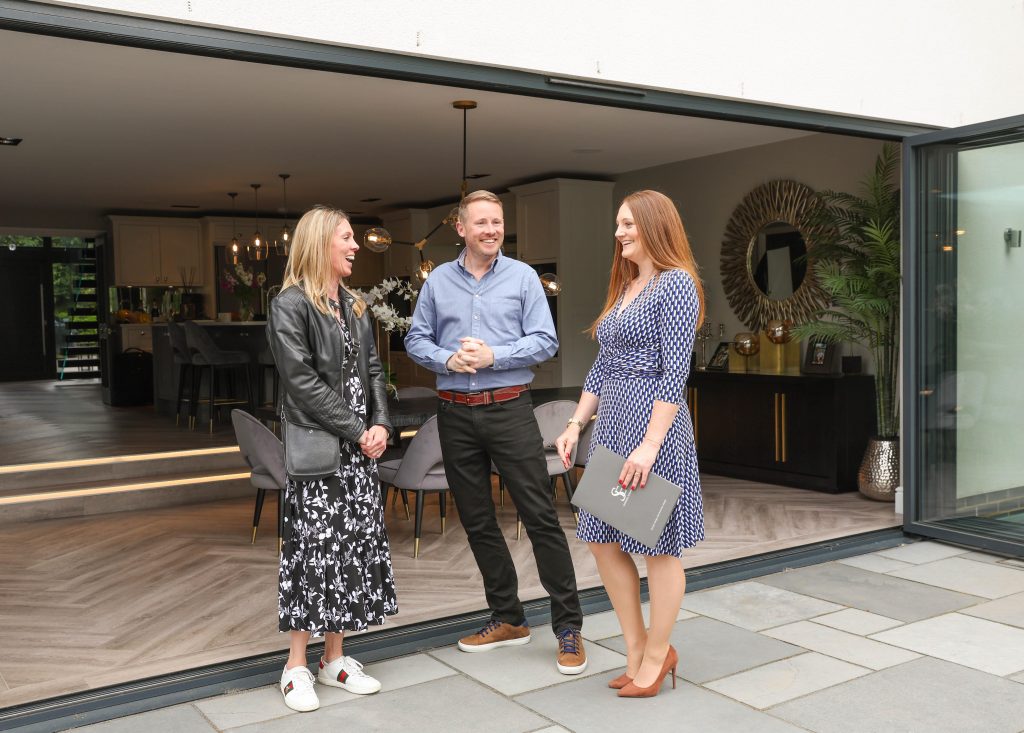
For a higher-value home, a viewing is often the point at which a buyer decides whether the property feels right. That is why accompanied viewings, led by someone who understands the house and the seller’s priorities, are so valuable. They allow the conversation to move beyond room dimensions and towards the details that matter: how the house works for family life, what has been improved, where the sun falls in the garden and what the local area offers day to day.
There is a balance to strike. Buyers need space to look around and talk openly, but they should not be left to guess at important features or practical information. A knowledgeable guide can answer questions accurately, notice hesitations and provide context without applying pressure.
Feedback should then be specific and honest. If several credible buyers raise the same concern, it is worth considering whether the issue lies with presentation, price or the way the home’s strengths are being communicated. Not every comment should prompt a change, but patterns deserve attention. Regular, candid communication enables decisions to be made while the campaign still has energy.
Focus on the quality of the offer
The strongest offer is not always the highest figure on paper. A seller should also consider the buyer’s funding, chain position, flexibility around timings and understanding of the property. A well-qualified buyer at a slightly lower price may represent a more secure route than a higher offer dependent on multiple uncertain sales.
This is where experienced negotiation matters. It is not simply about asking buyers to improve their bid. It involves understanding what each party needs, testing commitment, preserving goodwill and keeping the transaction moving once terms are agreed. The marketing process has done its job only when it brings forward a buyer who is both willing and able to proceed.
Stowhill Estates Berkshire approaches each sale as a personal journey, with the time to shape the strategy around the home rather than fit the home into a volume-led process. For sellers, that level of attention can be the difference between being widely seen and being properly understood.
A successful campaign should leave you feeling informed at every stage: clear about the price, confident in the presentation, aware of buyer response and supported when decisions matter. Give the launch the care your home deserves, and the right buyer is far more likely to recognise its value.