
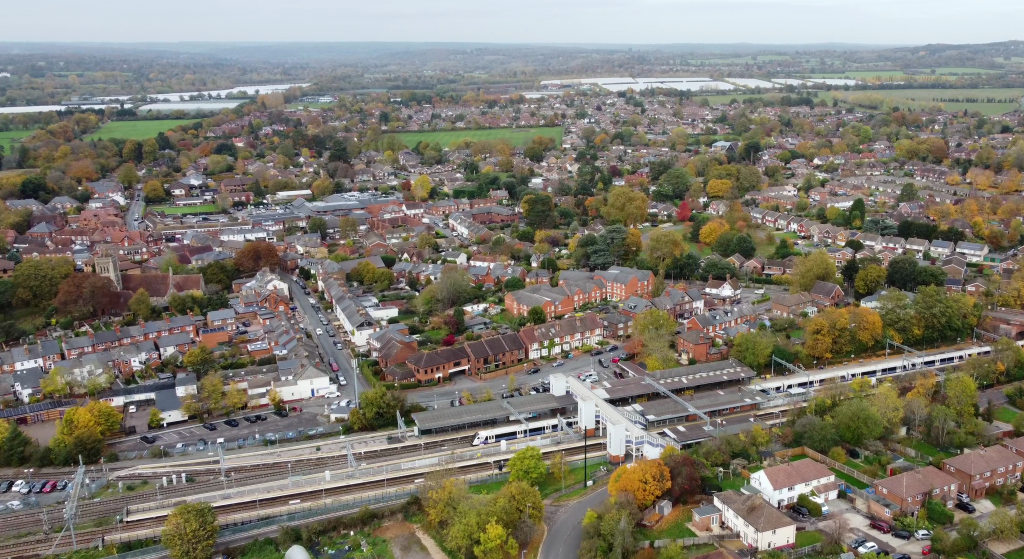
Living in Twyford offers a combination that is increasingly difficult to find: a proper village centre, direct rail connections, access to open countryside and a choice of characterful homes within reach of London. For families and established professionals, it can provide a calmer daily rhythm without feeling disconnected from work, schools or the wider Berkshire lifestyle.
Twyford is not a place chosen simply for its postcode. Its appeal lies in how it works day to day. The station, high street, local shops and community facilities are close enough to make many routines straightforward, while lanes and surrounding villages quickly lead towards a more rural setting. That balance gives the area lasting appeal, particularly for buyers seeking a home rather than just a convenient base.
What gives Twyford its appeal?
The village has a lived-in, well-supported feel. Independent businesses sit alongside familiar essentials, and the centre has enough activity to feel useful without becoming overly busy. There are cafés, pubs, places to eat and practical services, while regular community events add to the sense that people put down roots here.
Twyford’s position between Reading and Maidenhead is another clear advantage. It is well placed for Wokingham, Henley-on-Thames, Windsor and the M4 corridor, making it suitable for households with work, family and social commitments spread across Berkshire and beyond.
For many buyers, however, the important distinction is that Twyford retains its village identity despite those connections. It is possible to walk to the station, pick up everyday essentials and still be close to riverside walks, farmland and neighbouring villages such as Hurst, Wargrave and Waltham St Lawrence.
Transport links for living in Twyford
Twyford station is one of the village’s strongest practical assets. Great Western Railway services provide direct journeys towards London Paddington and Reading, while the Elizabeth line has broadened the appeal for those travelling across London. The precise journey that matters will depend on where work is based, but the station gives commuters options that many Berkshire villages cannot match.
Road access is equally relevant. The A4 connects Twyford with Maidenhead and Reading, and the M4 is accessible for journeys towards London, Heathrow and the West Country. As with any well-connected location, there is a trade-off: routes can become busy at peak times, and buyers should test their usual journeys rather than relying solely on a map.
For some households, being able to walk or cycle to the station is a deciding factor. Homes on the edge of the village may offer more space, privacy or a stronger country feel, but may require a car for the school run, shopping and rail travel. Neither option is inherently better. It depends on how a family intends to live.
Schools, green space and family life
Education is a significant part of Twyford’s draw. The area is served by respected local schools, including The Piggott School, and has access to a wider selection of independent and state education across East Berkshire. School catchment arrangements and admissions criteria can change, so they should always be checked directly before making a property decision.
Outside school hours, the area offers the kind of everyday freedom many families value. The River Thames at nearby Wargrave is ideal for walks and time on the water, while the countryside around Hurst and Shurlock Row provides footpaths, bridleways and quiet lanes. Dinton Pastures Country Park is also within easy reach for wider open space, lakeside walks and family activities.
Twyford is not trying to compete with a large town for retail choice or nightlife. Reading and Maidenhead are nearby when a broader selection is needed. In return, residents gain a more manageable pace, a community atmosphere and easier access to green space.
The homes you will find in and around Twyford
The property market is varied, which is one reason Twyford appeals to buyers at different stages of life. Near the centre, there are Victorian and Edwardian houses, period cottages and established family homes on residential roads. Further out, buyers may find larger detached houses, individual village homes, converted buildings and properties with more generous gardens or land.
Character is a major part of the local market. A handsome façade or large plot can add considerable appeal, but buyers should look beyond first impressions. Period homes may bring higher maintenance requirements, conservation considerations, older drainage or heating systems, and less predictable room layouts. Modernised homes can offer easier day-to-day living, although the quality of the work and the sensitivity of any extension remain important.
For sellers, this variety means that accurate positioning matters. A distinctive Twyford home should not be treated as a standard local listing. Its value may rest on a combination of plot, presentation, walkability to the station, school access, architectural detail and the quality of its setting. The right buyer is often looking for precisely that mix, so considered pricing and polished marketing are more valuable than simply generating the largest possible audience.
Choosing the right part of the village
A move to Twyford is rarely just about choosing a house type. Different pockets of the area suit different priorities.
Buyers who want the convenience of rail travel and village amenities often focus on roads within walking distance of the centre and station. Those looking for a quieter setting may prefer the edges of Twyford or nearby rural locations, where homes can have larger gardens and a more open outlook. Families may place greater weight on school routines, while downsizers may favour manageable gardens and easy access to shops, cafés and healthcare services.
It is worth visiting at more than one time of day. Walk the route to the station in the morning, drive the school route during term time and spend time in the village at the weekend. Practical details such as parking, road noise, footfall and local traffic often make the difference between a home that looks right and one that feels right.
What to consider before making a move
The strongest homes in Twyford can attract competition, particularly when they combine period character, thoughtful modernisation and a convenient position. Buyers should be ready to distinguish between features that can be changed and those that cannot. Kitchen finishes can be updated; a poor plot, awkward road position or long daily journey cannot.
Equally, sellers should recognise that buyer demand is not identical across every price point or property type. A well-presented family home near the station may appeal very differently from a substantial country house on the village fringe. Evidence-based pricing should reflect recent local transactions, competing homes, condition and the specific reasons a buyer would choose that property over another.
At Stowhill Estates Berkshire, we see that the best decisions tend to come from clear local advice rather than broad assumptions about the market. Whether buying or preparing to sell, understanding the detail behind a home’s location, presentation and buyer appeal is essential.
Twyford rewards a considered approach. Spend time in the village, test the routines that matter to you and look closely at the setting around each home. When the practicalities and the lifestyle align, it is a place where a move can continue to feel well judged long after completion.